


What’s the Difference Between Pulsed MIG and Standard MIG?
August 10, 2026
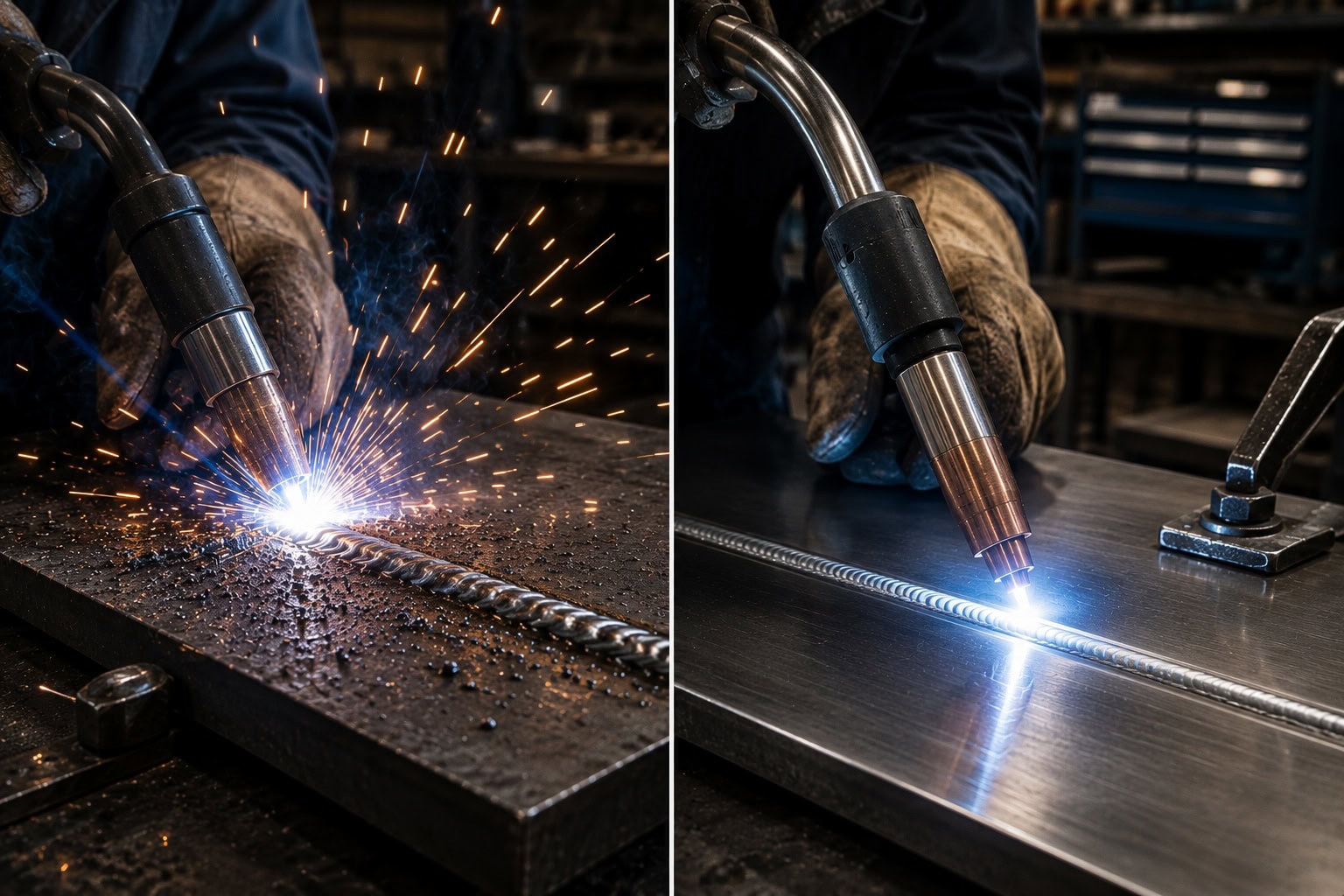
If you have shopped for a MIG welder lately, you have probably seen “pulsed MIG” listed as a feature on the higher end machines. It sounds like a premium upgrade, and it can be, but it is not always the right tool for the job. Pulsed and standard MIG weld the same basic way, feeding a wire through a gun while shielding gas protects the weld pool. The difference is in how the machine delivers the current, and that changes what each one is good at.
How Standard MIG Works
Standard MIG runs a steady current the whole time you are welding. Depending on how you set the machine, the wire crosses the arc in one of two main ways. At lower settings it uses short-circuit transfer, where the wire actually touches the pool and shorts out as many as a couple hundred times a second. That keeps the heat down, which is why it works on thin steel, but it can throw spatter. Turn the power up and you reach spray transfer, where the metal crosses as a fine mist of droplets. Spray gives you a smooth, fast, clean weld, but it runs hot and is mostly limited to thicker metal in the flat and horizontal positions.
So with standard MIG you are often stuck choosing. Run cool and accept some spatter, or run hot and clean but only on heavier material.
How Pulsed MIG Works
Pulsed MIG is a way around that tradeoff. Instead of a steady current, the machine pulses between two levels many times a second. A high peak current pinches off one droplet of metal and sends it across the arc, the same clean spray-type transfer you get at high power. Then the current drops to a low background level that keeps the arc lit but lets the weld pool cool for a moment before the next pulse.
The result is spray-quality transfer at a much lower average heat. You get the clean look and low spatter of spray transfer without pouring as much heat into the part. Because the wire never dips into the pool, there is essentially no short-circuit spatter either.
What Pulsed MIG Does Better
The lower, controlled heat is where pulsed MIG earns its keep. It shines when:
- You are welding thin material and standard settings would burn through
- You want to reduce warping and distortion on a finished part
- You are running aluminum or stainless, where too much heat causes real problems
- You want spray-quality welds out of position, not just flat and horizontal
- You want less spatter and less cleanup afterward
Pulsed MIG also lets you run a slightly larger diameter wire on thinner material than you normally could. That can mean buying fewer spools and getting smoother feeding, since larger wire tends to feed more consistently.
Where Standard MIG Still Wins
None of that makes standard MIG obsolete. For a lot of everyday work it is still the smarter choice. It costs far less up front, since pulsed capability usually comes on more expensive inverter machines. It is simpler to set up and run, which matters when you are learning or when anyone in the shop might pick up the gun. On thicker steel in the flat position, plain spray transfer also lays down metal fast without any need for pulsing.
If most of your work is general fabrication and repair on mild steel, a good standard MIG machine will handle it all day.
Which One Do You Need?
It comes down to your material and your work. If you spend your days on thin gauge, aluminum, stainless, or parts where appearance and low distortion matter, pulsed MIG can pay for itself in cleaner welds and less rework. If you are mostly welding heavier mild steel and want the best value, standard MIG is hard to beat.
Not sure which machine fits your work? Stop by any Vern Lewis Welding Supply location. Tell us what you weld most and we will walk you through the options, from a solid standard MIG unit to a pulsed machine, and set you up with the wire and gas to match.
Join Our Newsletter
Sign up for our newsletter to receive specials offers, product updates, and more!
Recent Posts
-
What’s Actually Happening in the Weld Pool?
September 2, 2026
-
Why “More Heat” Isn’t Always the Right Answer
August 19, 2026
-
How to Prevent Metal Warping While Welding
August 14, 2026